
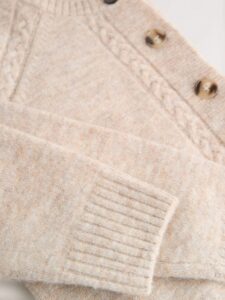
A colour swatch can earn a quick approval while the finished garment still has the wrong weight, drape or print scale. If the buyer sees those differences for the first time in a pre-production sample, the mill, printer and garment factory may already be working from different instructions. A fabric approval process gives all three teams the same specification, physical reference and written decision before bulk fabric is committed.
Define the fabric before requesting samples
Start with the garment and how it will be used. In the tech pack, list the fabric supplier’s article number if known, fibre composition, knit or weave construction, target weight and tolerance, usable width and required finish. Add the intended care instructions and flag anything that affects the finished look, such as a brushed surface, a soft hand feel or the opacity needed for a light colourway.
Give each colourway its own reference and specify which fabric components should match. A navy polo may have body jersey, rib at the collar and a separate placket trim. Ask the mill or factory to submit those pieces together on the proposed materials so the buyer can judge how they look on the finished garment. Name the person who can approve a change and agree when that decision is due.
Approve solid colours and prints
Request a lab dip, a small dyed fabric sample, for each solid colour. Ask for labelled options on the intended fabric construction or a clearly identified development base. Review the options against the agreed colour reference under the lighting specified in the buyer’s colour standard. If two materials need to match on the garment, review them next to each other under each agreed light source. Note the selected option, submission date and any condition attached to the approval.
For a print, request a strike-off on the intended base fabric. Include the final artwork version, colour references, repeat size and scale. Review the print against the artwork for line clarity, colour alignment and coverage. Check any placement requirement on a garment panel, particularly when a motif must sit at a specific distance from a pocket, seam or hem. If the buyer changes the base fabric, finish or print artwork after sign-off, ask the supplier to show how that change affects the approved appearance.
Agree what the fabric has to pass
Choose tests around the intended use and the buyer’s requirements. For example, a dark jersey with a light trim may warrant a rubbing colourfastness check, and a fitted style may need a fabric dimensional-change check under the intended laundering conditions. Record the test method, specimen, care conditions where applicable and acceptance limit. AATCC TM8 addresses colour transfer by rubbing. AATCC TM135 addresses dimensional change in fabrics after home laundering.
Match the report to the correct fabric, finish and colour or lot as required by the order. A passing report for a different material gives the factory little basis for releasing the submitted fabric. If a result falls outside the agreed limit, document the correction, request the necessary retest and record the release decision.
Keep one approval record for the order
Give each submission an ID and use it in comments, test reports and the approval email. Keep a physical reference with the buyer or sourcing team and another with the supplier or factory. Where a colour or placement decision depends on the original sample, a dated photo helps track which option was selected and the physical sample remains the comparison standard.
| Checkpoint | Evidence to keep | Decision before moving on |
| Fabric specification | Fabric code, construction, weight, usable width and finish | Confirm the supplier can make the agreed material. |
| Colour or print | Labelled lab dip or strike-off and the current artwork file | Approve the exact option or request a revised submission. |
| Performance | Test report tied to the correct material and required specimen | Record which requirements passed and resolve exceptions. |
| First bulk lot | Labelled swatches, dye-lot details and inspection notes | Confirm the lot matches the approved reference and agreed tolerances. |
Check the first bulk delivery before cutting
Agree how the mill or factory will identify rolls, separate dye lots and flag shade differences. Compare representative swatches from the first bulk delivery with the approved reference under the agreed lighting. If visible differences appear across rolls or within a roll, identify the affected material and follow the buyer’s segregation or hold procedure. Share the decision with the cutting team so components that need to match can be planned together.
Review variations in the context of the garment. A small visual difference between separate pieces may be apparent when a pocket is stitched over a front panel. A print that meets the repeat dimensions on the roll may still need a marker check if visible placement is critical on the finished garment. Close those points using the approved fabric, garment sample and cutting plan together.
Before bulk fabric is released
Confirm that the approved fabric specification and care instructions are current.
File the signed lab dip or strike-off, with the matching physical reference and submission ID.
Confirm that required test results and any approved exceptions are on record.
Identify which bulk lot was accepted and tell the factory who can release it to cutting.
When the mill, printer and garment factory are managed separately, appoint one owner to circulate the latest approvals. Zastex Fashion explains how it supports factory selection, sampling and production coordination on its Apparel Sourcing Company in Bangladesh page.
Technical references
AATCC TM8 — Colorfastness to Crocking
AATCC TM135 — Dimensional Changes of Fabrics after Home Laundering